
Clinical decision support software that automatically identifies hospitalised older patients at risk of oropharyngeal dysphagia, using routine data from the electronic health record.
FOR HEALTHCARE PROFESSIONALS
The information on this page is intended for qualified healthcare professionals.
Who it is for
AIMS-OD supports the screening of oropharyngeal dysphagia in hospitalised patients aged 65 and over. It is designed for healthcare professionals such as nurses, physicians, speech and language therapists, nutritionists, physiotherapists and occupational therapists.

How it works
Routine data
AIMS-OD analyses clinical data already recorded in the electronic health record. No additional tests or questionnaires are needed to obtain the result.
Clear result
Each patient is classified as Yes, No or Unknown (when there is not enough information to classify).
At the point of care
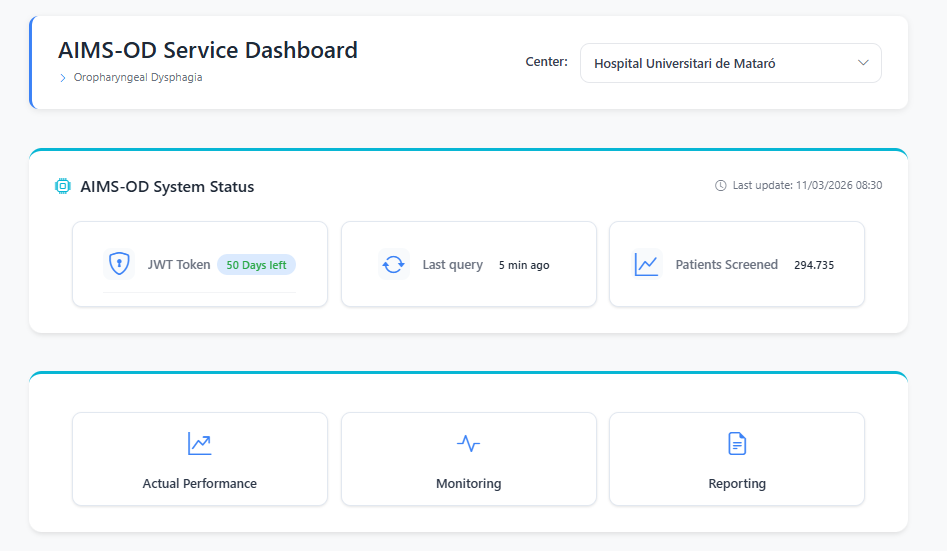
The result is shown to the care team within their usual clinical systems.
In the clinical workflow
1
AIMS-OD analyses the patient’s routine clinical data.
2
The risk result is shown to the care team.
3
Patients at risk are confirmed with a clinical swallowing assessment and, if needed, an instrumental evaluation.
4
The care team decides on the appropriate management.
Why it matters
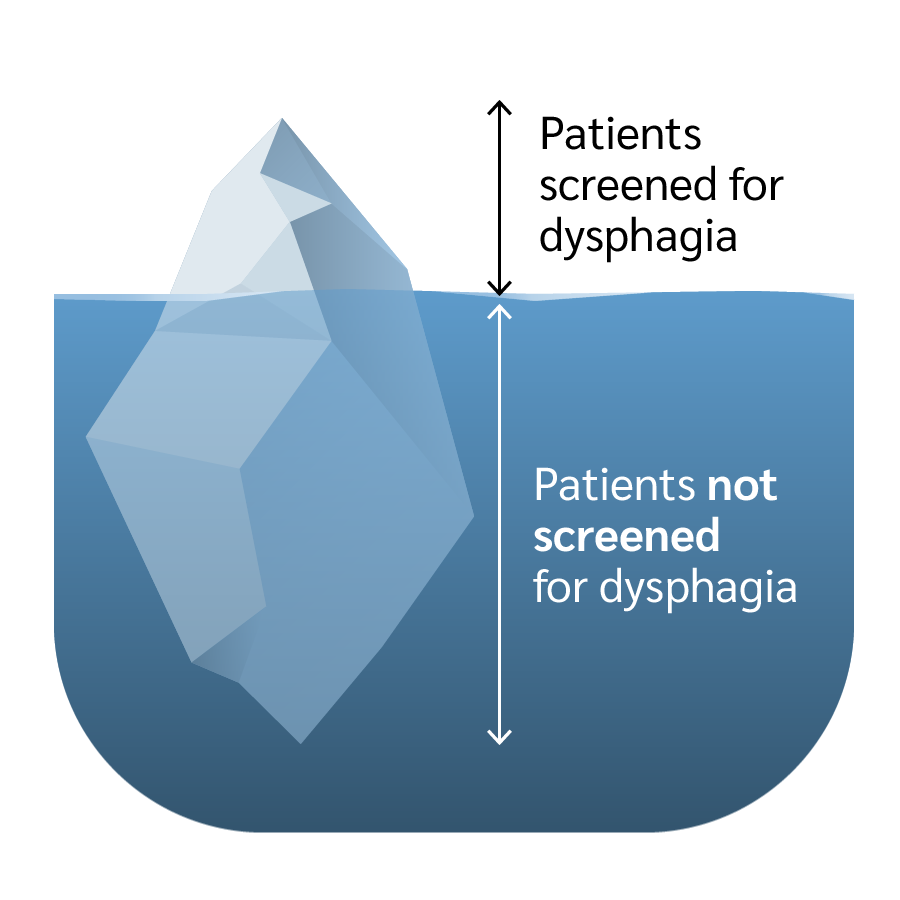
Oropharyngeal dysphagia is common among hospitalised older adults and often goes undiagnosed. Left undetected, it can lead to malnutrition, respiratory infections and aspiration pneumonia. Systematic screening helps identify patients at risk early.
Scientific evidence
- Martin-Martinez A, et al. A Systematic and Universal Artificial Intelligence Screening Method for Oropharyngeal Dysphagia: Improving Diagnosis Through Risk Management. Dysphagia, 2023.
- Amadó C, et al. A Comparative Study of the Psychometrics and Feasibility of Artificial Intelligence Algorithms Versus the Standard Screening Methods for Oropharyngeal Dysphagia in Older Adults: A Scoping Review. Dysphagia, 2026.
- Martín-Martínez A, et al. Assessing the prevalence and the underdiagnosis of aspiration pneumonia among older hospitalized patients with community-acquired pneumonia using an artificial intelligence algorithm. Pneumonia, 2025.
Integration & API
AIMS-OD integrates with the electronic health record through a REST API. See the technical documentation.
Used in clinical practice
“AIMS-OD has allowed us not only to screen patients efficiently and quickly but has also been the impetus for diagnosing and treating OD.”
Joan FornsDysphagia reference nurse at the Intermediate Care Unit of the Maresme i la Selva Health Corporation
“The fact that AIMS-OD indicates patients at risk of oropharyngeal dysphagia helps us detect clinical signs of alterations in swallowing efficacy and safety. Thus, we can personalize the adaptation of viscosities and the diet of patients according to their needs.”
Mireia ArdilaNurse (Monitor of the multipurpose intermediate care area) at the Mataró University Hospital.
Frequently asked questions
Does AIMS-OD replace clinical assessment?
No. AIMS-OD is a screening tool, not a diagnostic tool. It does not replace established clinical or instrumental methods, and the final diagnostic decision always rests with the healthcare professional.
What does Unknown mean?
A valid classification could not be generated because the patient’s data are missing, incomplete or out of range.
Who can use it?
Healthcare professionals in hospital settings caring for patients aged 65 and over.